Pacific Grove, Carmel-by-the-Sea and Monterey each handle historic homes differently, and the houses themselves share a set of conditions worth knowing before any plans are drawn. This guide covers both.
Can You Renovate a Historic Home on the Monterey Peninsula?
Usually, yes. The most common misunderstanding about historic homes in Pacific Grove, Carmel-by-the-Sea and Monterey is that a historic designation freezes the house. It doesn’t. Historic home renovation happens on the Peninsula every year: additions, structural upgrades, new kitchens and baths. What changes is the order of operations. Exterior work goes through a historic review first, and that review is mostly about keeping the home’s visible character intact.
Interiors are generally not what historic review looks at. A kitchen, a bathroom, new wiring or a reworked floor plan inside the walls is typically handled with ordinary building permits. The exterior (the siding, windows, rooflines, porches and trim that make the house read as its era) is where the review typically happens.
Nate Randall grew up in a 1920s Craftsman in Pacific Grove, and has remodeled his own home, pulling the permits and passing the inspections himself. He represents buyers and sellers of older homes across the Monterey Peninsula with Sotheby’s International Realty.
Is the House Historic? How Each Peninsula City Decides
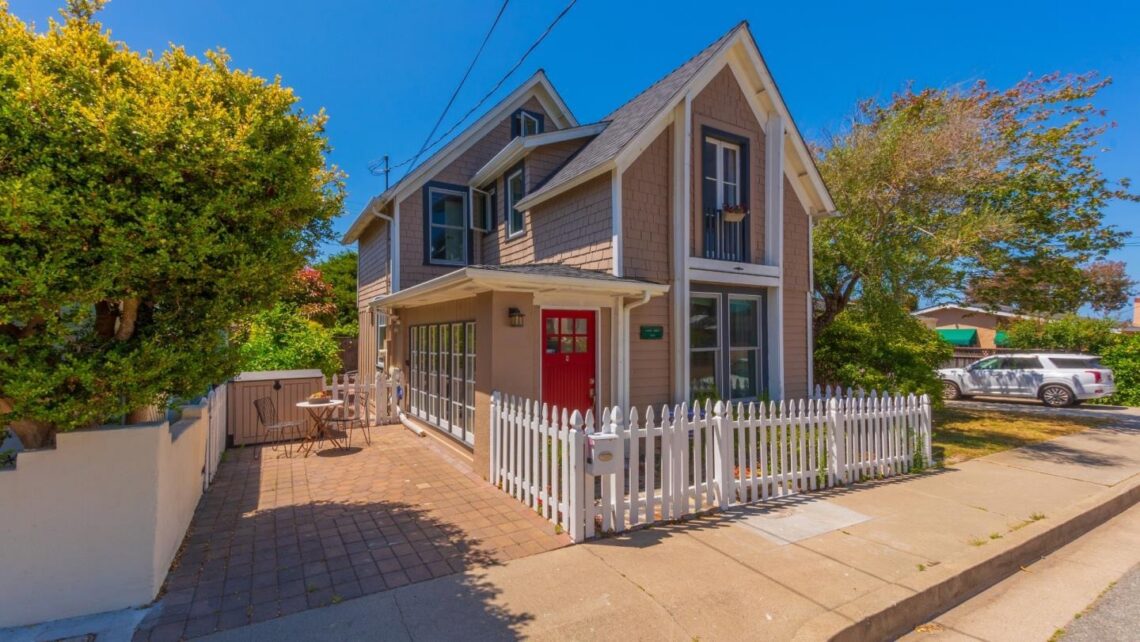
The first question for any renovation plan is whether the home is actually treated as historic, and Pacific Grove, Carmel-by-the-Sea and Monterey answer it differently. Age alone does not settle it, and neither does a plaque by the front door. Before planning work, or before writing an offer on a house bought for its potential, find out which system applies and where the home stands in it.
Renovating a Historic Home in Pacific Grove
What Pacific Grove’s Historic Review Covers
Pacific Grove keeps a citywide Historic Resources Inventory, and the city’s historic rules apply to homes on that list. The city’s historic resources page links to a searchable inventory database. A Pacific Grove home that isn’t on the inventory is not reviewed as historic simply because it is old.
For a listed home, additions and exterior alterations go to the Historic Resources Committee, including exterior changes that wouldn’t otherwise need a building permit. The review is about cosmetic character: the profile of the house, its window and door openings, roofing materials and trim. Paint color is not among the things Pacific Grove reviews.
Structural Work and Additions on a Pacific Grove Historic Home
Substantial work gets approved on listed Pacific Grove homes. On a recent project, an owner added plywood shear bracing around the foundation for seismic strength; the historic requirement came down to finishing it with a piece of siding matched to the original. Additions and even second stories are possible when they are placed and scaled so the original house still reads clearly from the street. Nate’s guide to historic homes in Pacific Grove covers what the city’s architectural review guidelines look for.
Building-code safety is not something historic review can waive. What a listed home does get is access to the California Historical Building Code, which lets a building official accept alternative ways of meeting safety goals when the standard approach would destroy historic fabric. That flexibility applies to buildings on a historic register or inventory, which is one more reason to know a home’s status early.
Getting a Pacific Grove Home On or Off the Inventory
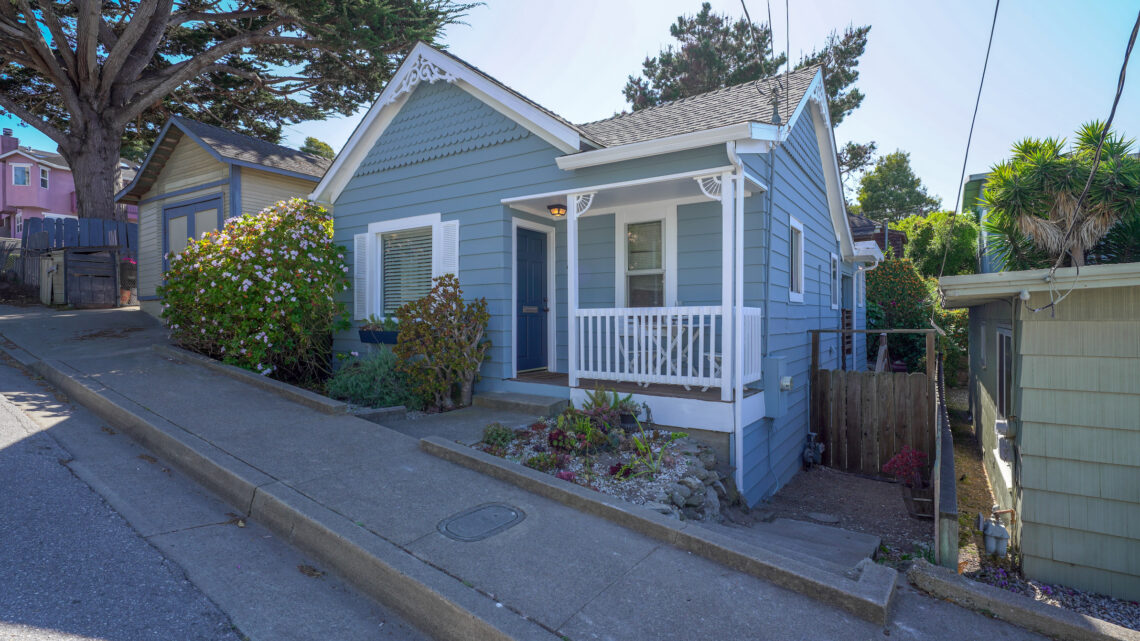
Listing status can change. The Historic Resources Committee decides additions to and removals from the Pacific Grove inventory, and an owner can apply for a historic determination under the city’s historic preservation ordinance.
A citywide survey completed in 2019 recommended some properties for removal. A recommendation is not a removal: each one still has to be acted on by the Committee, and some Pacific Grove homes recommended for removal remain on the inventory years later. The city’s database, not the survey report and not the listing sheet, is the place to confirm a home’s current status.
Renovating an Older Home in Carmel-by-the-Sea
Carmel Decides Historic Status When You Apply
Carmel-by-the-Sea keeps its own Inventory of Historic Resources, but it also looks at older homes that are not yet on it. When a Carmel home is more than 50 years old and a project involves exterior work (a roof, siding, windows, an addition), the city may require a historic evaluation before issuing permits. A home that doesn’t meet the city’s criteria receives a Determination of Ineligibility; one that does is added to the inventory.
That timing is the practical point for a buyer. In Carmel, whether an older home will be treated as historic is often not known until someone applies to change its exterior, which can be after the sale has closed.
Remodeling a Listed Historic Home in Carmel
Exterior projects on an inventoried Carmel home are reviewed by the city’s historic preservation consultant and approved by the Historic Resources Board, measured against the Secretary of the Interior’s Standards for historic properties. This runs alongside Carmel’s design review process, which shapes exterior work throughout the city.
These are Carmel-by-the-Sea city rules. Many homes with a Carmel mailing address sit outside the city limits, in unincorporated Monterey County, where permitting and historic review run through the county instead.
Renovating a Historic Home in Monterey
Monterey protects its historic buildings through historic zoning, historic districts and a long-running program of neighborhood surveys, described on the city’s historic preservation page. Changes to a designated Monterey home go through a historic permit, and the city’s preservation reports identify which features of a building matter historically and which don’t.
Most older Monterey homes are not formally designated, and they are renovated under ordinary permits. Nate has bought and sold many older homes in Monterey, and the physical realities covered below apply to them just as they do to a listed house.
What You’ll Find Inside a Monterey Peninsula Historic Home
The rules decide what a renovation is allowed to change. The house itself decides what it needs. Homes built from the late 1800s through the mid-20th century share a set of conditions worth understanding before a purchase or a remodel, some of them costs and some of them assets that newer houses can’t match.
Wiring, Plumbing and Hazardous Materials in Older Peninsula Homes
Knob-and-tube wiring turns up more often in historic homes. Sometimes it has been fully abandoned and is simply still visible in the attic or crawlspace; sometimes a section is still live. Insurance carriers routinely ask about the age and type of wiring, and upgrading the main electrical panel is often the point where the remaining knob-and-tube is retired.
Galvanized steel water lines are common in homes of this era and tend to narrow and corrode from the inside. Lath and plaster walls are solid and quiet, but running new wiring or plumbing through them takes more time and care than working with drywall.
Homes built before 1978 may contain lead-based paint, and asbestos turns up in a range of older building materials. Contractors commonly test suspect areas before opening them up.
The Bones: Lumber, Floors and Foundations in Historic Homes
The framing in a Peninsula home from the early 1900s through the 1950s is often excellent. Much of it is old-growth lumber, clear and dense, cut to fuller dimensions than modern boards, and some homes are framed in redwood, which resists rot and insects.
Floors are a frequent surprise. Douglas fir flooring was popular in the early 1900s, and original fir is often found hiding under later carpet or vinyl. It is a softwood rather than a hardwood, but it refinishes beautifully. In many homes of this age the fir boards are the subfloor as well, laid directly over the joists with no separate plywood layer.
Foundations are where older homes most often need attention. Many were built before houses were routinely bolted and braced to their foundations, which is why seismic work like the shear bracing described above is one of the most common upgrades on a historic home. Many older Peninsula cottages also have little or no insulation, and some are single-wall construction.
Windows, Roofs and Chimneys on Historic Homes
Original single-pane windows are part of what makes a historic facade, and many are beautiful. They are less efficient than modern glazing, for both heat and sound. Windows that have been painted shut or no longer operate can usually be restored rather than replaced, which is often the path of least resistance with historic review as well.
Wood shake roofs add real character, but they increasingly draw scrutiny from fire insurance carriers, and roofing material is one of the exterior elements historic review looks at.
Older masonry chimneys were not built or reinforced to current standards. Many historic fireplaces have been capped and fitted with a gas insert; wood burning remains possible in many homes once the chimney has been inspected and brought up to standard. In some houses the chimney runs the full height of the structure, down to its own footing, so removing or shortening one is a structural question as well as a design one.
Floor Plans and Older Building Codes in Historic Homes
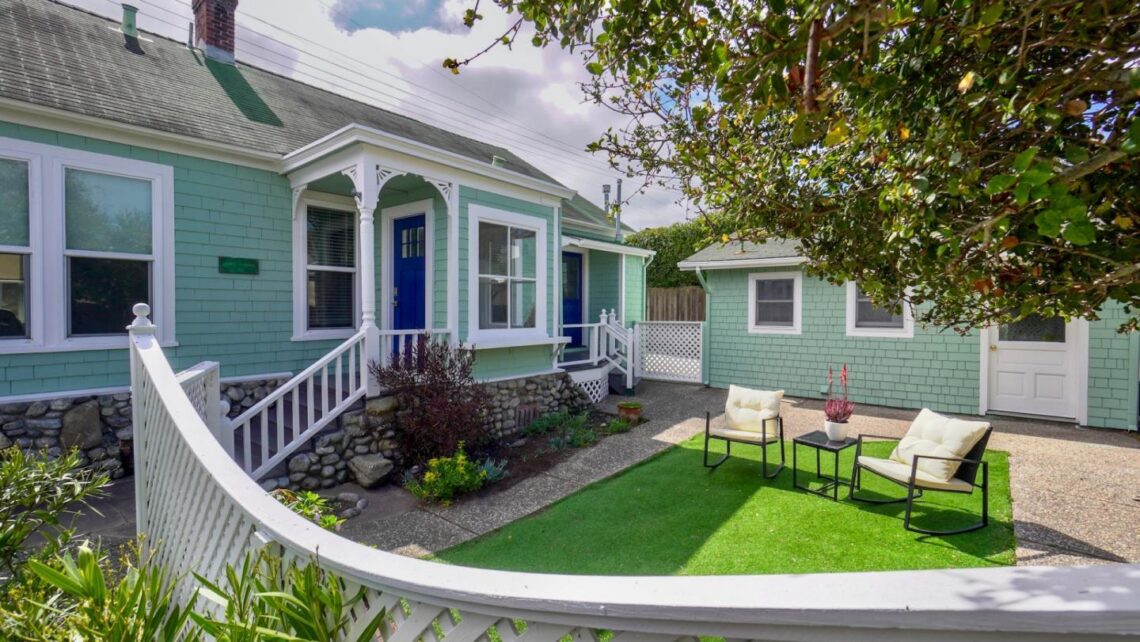
Historic homes were built to the codes and habits of their time. Stair railings and balcony guards are often lower than today’s standard, stairs steeper and headroom tighter. Garages were not part of the original design for much of this housing stock, so parking is often a detached structure added later, or the street.
Floor plans reflect how people lived a century ago. Many Victorian and Craftsman homes put every bedroom upstairs, sometimes four bedrooms sharing a single bathroom, and the ground-floor primary suite that many buyers now look for is frequently the thing a renovation is planned around. Bedrooms sometimes have no closet, because the original owners used armoires; no code requires a closet for a room to function as a bedroom, though size and a compliant egress window do matter.
Older homes also hold small details newer houses don’t: a working dumbwaiter, a built-in ironing board, original cabinetry and hardware.
Original Details Worth Keeping in a Historic Home
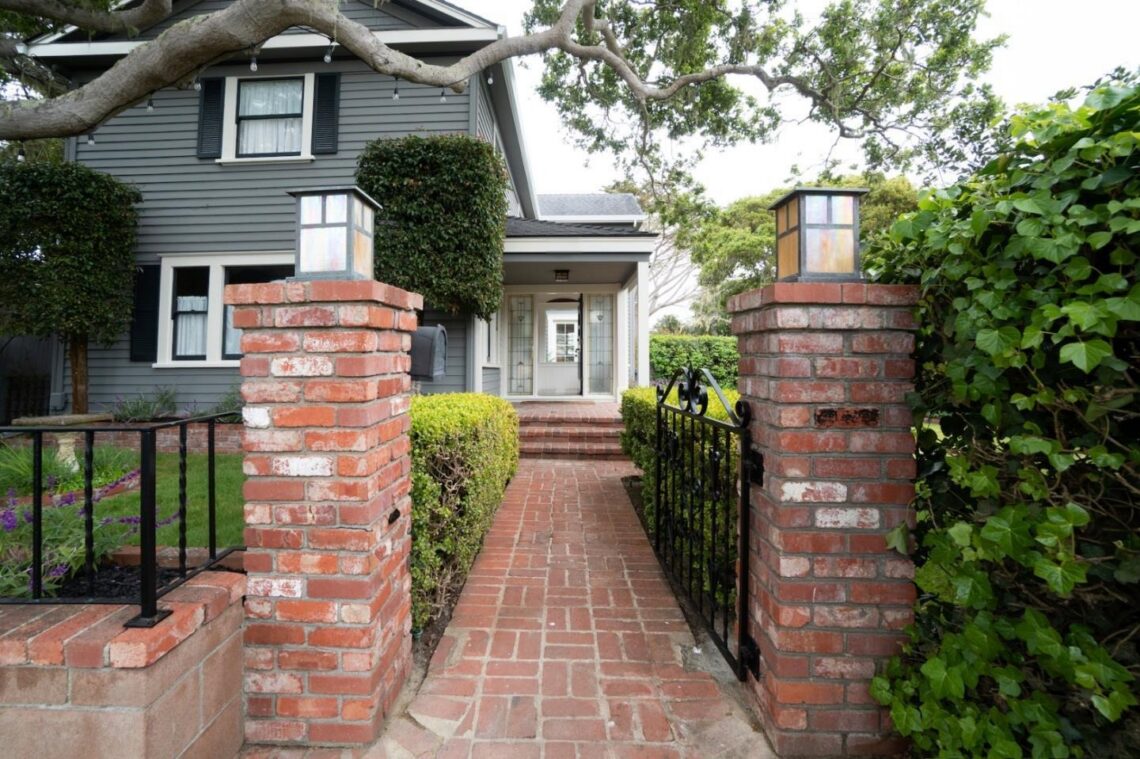
As historic features continue to disappear, the ones that survive are increasingly prized. That includes the modest ones: an original wrought iron gate, a decorative lamp post, old brick paths and garden walls. Yard and landscape features can get less attention in historic review than the house itself, which is exactly why they get lost. A gardener or contractor clearing a yard can remove in an afternoon something that took a century to acquire its character, so it is worth pointing them out before work begins.
Water Credits and Historic Remodels on the Monterey Peninsula
On the Monterey Peninsula, water is often a larger constraint on a renovation than historic review. Adding a bathroom, a laundry or other water fixtures requires the water to support them, and many historic homes were built with far fewer fixtures than a modern plan calls for. The upstairs-bedrooms-sharing-one-bath layout described above is exactly where this comes up. Before planning an addition, understand how water credits work and what the property already has.
Tax Incentives for Historic Homes on the Monterey Peninsula
The Mills Act lets owners of qualifying historic properties enter a contract with their city that can substantially reduce property taxes in exchange for maintaining the building. Pacific Grove does not participate. Monterey and Carmel have both offered Mills Act contracts. An existing contract stays with the property when it sells, which makes it worth asking about on any historic home in those cities; whether a city is currently accepting new applications is a question to put to the city directly.
Historic properties used to produce income, such as a bed-and-breakfast or a rental, may qualify for the federal historic tax credit, equal to 20% of qualified rehabilitation costs on certified projects. It does not apply to an owner-occupied home, and it is less widely known than it should be. Nate is not a CPA, so whether a property qualifies is a question for a tax professional.
Buying or Renovating a Historic Home With Nate Randall
Which rules apply to a historic home comes down to the specific property: its city, its inventory status, its water, and what the house itself is hiding. Nate Randall is a RealTrends Verified 2026 agent ranked in the top 1.5% of real estate professionals nationwide, born and raised on the Monterey Peninsula. He helps buyers understand what a historic home can become before they write an offer, and helps owners understand what their home is worth as it stands. For more on buying one, see his guide to buying a historic home in Pacific Grove.
Call or text Nate at 831-869-6117, or reach him at nate@randallrealty.com.